
16 December 2025 – 2025 was a defining year for the HMHB Consortium and its partners. Strong evidence, political momentum, and partnerships advanced multiple micronutrient supplementation (MMS) and balanced energy and protein (BEP) dietary supplementation as essential, equitable, and scalable solutions for healthier pregnancies and stronger babies, with initial progress on calcium supplementation.
Global Recognition and Endorsement for MMS
At the Nutrition for Growth (N4G) Summit in Paris, the Eleanor Crook Foundation (ECF), Children’s Investment Fund Foundation (CIFF), Gates Foundation, and Kirk Humanitarian committed USD 250 million toward MMS scale-up. TIME Magazine named UNIMMAP MMS one of the Best Inventions of 2025, reflecting the growing consensus on its transformative potential. FIGO issued new Good Practice Recommendations endorsing MMS over iron–folic acid (IFA) alone for pregnant women in low- and middle-income countries (LMICs) and in populations with a high prevalence of nutritional deficiencies among women of reproductive age. The “Further with 15” narrative unified advocacy around the 15 essential nutrients in UNIMMAP MMS, driving impact.
-
MMS Joint Challenge Commitment Statement released at the Nutrition for Growth Summit 2025 in Paris.
Learn more -
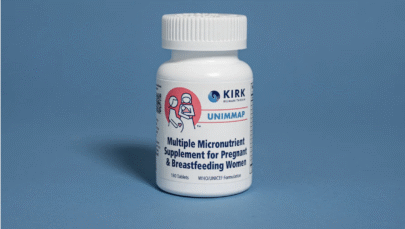
TIME named UNIMMAP MMS one of the best inventions of 2025
Learn more -
FIGO Good Practice Recommendations released at the FIGO World Congress 2025 in Cape Town, South Africa
Learn more
Strengthening the Evidence Base
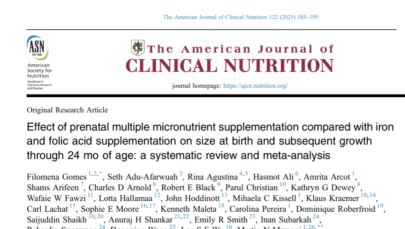
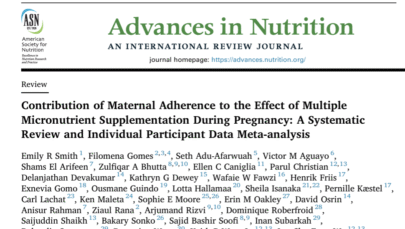
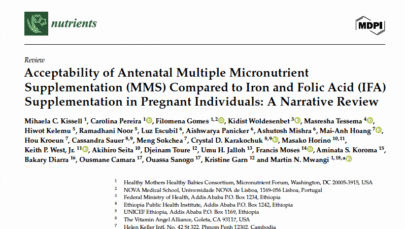
New research by the MMS Technical Advisory Group (TAG) showed that MMS significantly improves birth size and early infant growth, reducing infant undernutrition in the first months of life, compared to IFA. A meta-analysis found that early initiation and high adherence to MMS reduce the risk of low birthweight and small-for-gestational-age births. Additionally, a narrative review showed that pregnant women prefer MMS over IFA supplements, due to better tolerance, fewer or comparable side effects, and greater perceived benefits for both mothers and babies.
Translating Knowledge for MMS Action
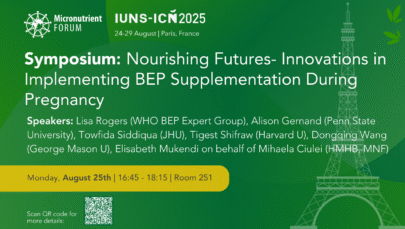
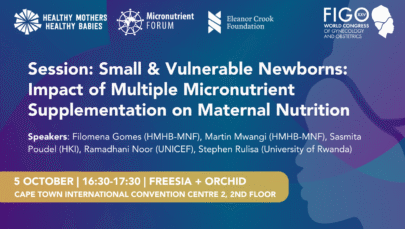
Accompanying briefs on publications in multiple languages – French, Spanish, Portuguese, and Arabic – communicated key findings on how MMS enhances infant health and why women prefer MMS over IFA to a wider audience. HMHB hosted technical sessions on MMS and BEP dietary supplementation at major international conferences like IUNS-ICN and presented findings on MMS’s impact of on Small and Vulnerable Newborns at the FIGO World Congress. Additionally, HMHB provided technical presentations on MMS evidence to Ministries of Health in countries such as Côte d’Ivoire, Kenya, Cambodia, Yemen, Indonesia, the Philippines, Mozambique, and Uganda.
Guidance from MMS and BEP TAGs
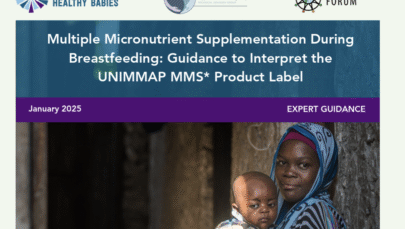
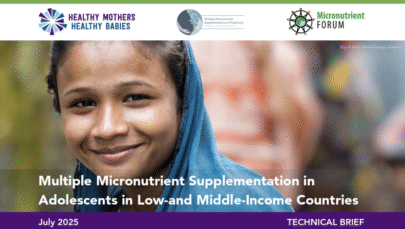
New guidance from the MMS TAG aided decision-makers in understanding the inclusion of breastfeeding women in the UNIMMAP MMS product label, facilitating informed postpartum use of MMS. A technical brief confirmed that MMS is safe and beneficial for pregnant women, including adolescents, although evidence for non-pregnant adolescents remains limited. Another brief consolidated the latest insights on MMS during pregnancy. Additionally, the BEP TAG released a fact sheet and an FAQ for stakeholders.
-
Fact Sheet: BEP Dietary Supplementation
Learn more -
FAQ: BEP Dietary Supplementation
Learn more
Country Progress and Regional Leadership for MMS
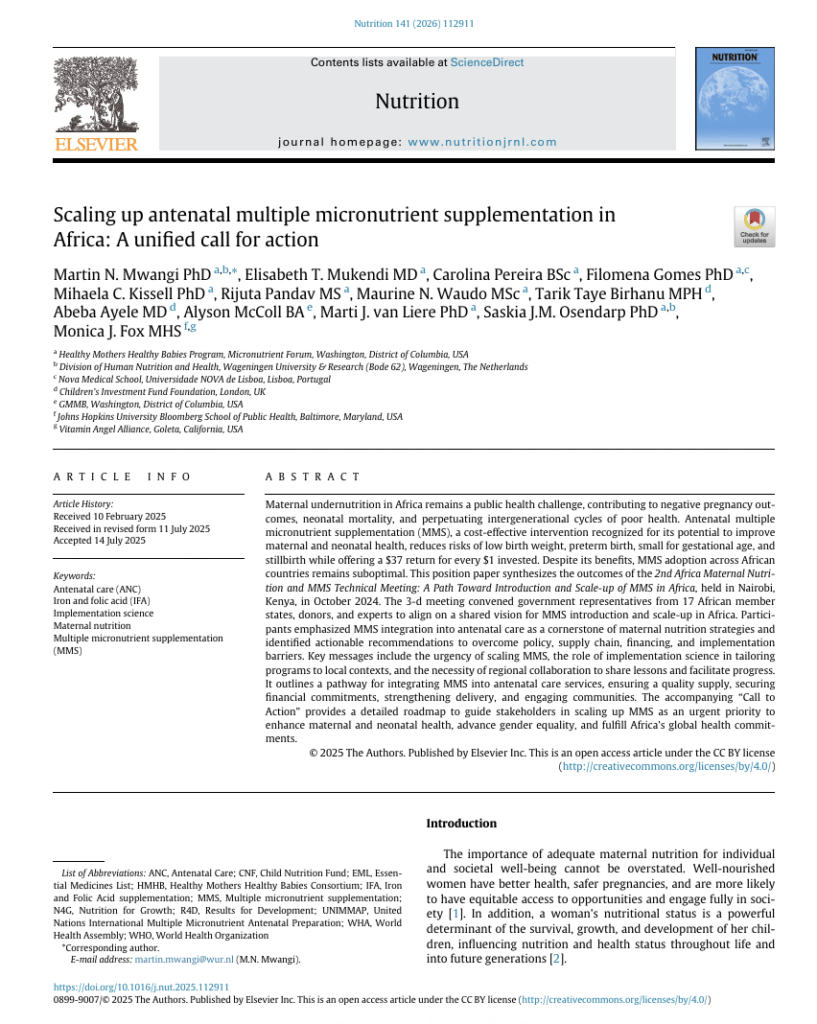
Cambodia advanced steps to include MMS in its Essential Drug List; Kenya launched a National MMS Technical Working Group; Indonesia’s nationwide transition reached more than one million women; and Rwanda strengthened systems for delivery through a high-level policy and planning workshop. Ethiopia launched its MMS trial results and Costed National Roadmap for transitioning from IFA to MMS. A position paper, resulting from the 2nd Africa Maternal Nutrition and MMS Technical Meeting organized in 2024, reaffirmed collective leadership on maternal nutrition by 17 African countries.
Read the Position PaperConnecting Knowledge and Communities
The HMHB Consortium now has almost 500 individual and organizational members from across the world. HMHB’s multilingual Communities of Practice grew to more than 500 members, providing a global platform for learning and exchange. HMHB continued to engage the maternal nutrition community through five virtual, interactive Coffee and Chai Chats, 13 Expert Interviews, and 21 Knowledge Bytes to disseminate knowledge on various technical topics related to MMS and BEP dietary supplementation.

Looking Ahead to 2026
With enhanced science, clearer guidance, and accelerating country actions, MMS, BEP, and calcium supplementation are set to significantly improve care for millions of women and babies. The Micronutrient Forum’s 7th Global Conference will be a catalytic moment, positioning HMHB as a hub for technical leadership, regional learning, and country-driven solutions, while centering women’s voices in policy and practice. To support this vision, the MMS TAG is delivering global analyses on the cost-effectiveness of transitioning from IFA to MMS in 25 LMICs, the role of MMS in preconception, safe co-administration with calcium, and use in complex health contexts such as malaria, HIV, hemoglobinopathies, and iron deficiency anemia. In parallel, HMHB, the BEP TAG, and WHO are shaping guidance on BEP dietary supplementation, translating lessons from nine countries into published evidence, clarifying effective delivery platforms, and generating comparative evidence on BEP formulations to inform smarter, more equitable investments in maternal and newborn health. HMHB will continue to convene and engage the maternal nutrition community through global and regional platforms, conference sessions, virtual Coffee and Chai Chats, and a Consortium members’ meeting in 2026.