

10 October 2025 – The Healthy Mothers Healthy Babies (HMHB) Consortium, hosted by the Micronutrient Forum, played a pivotal role in advancing maternal nutrition advocacy at the XXV FIGO World Congress of Gynecology and Obstetrics 2025, held in Cape Town, South Africa, from 5-9 October. Supported by the Eleanor Crook Foundation (ECF), HMHB elevated global awareness of multiple micronutrient supplementation (MMS) as a cornerstone intervention to improve maternal and newborn health outcomes.
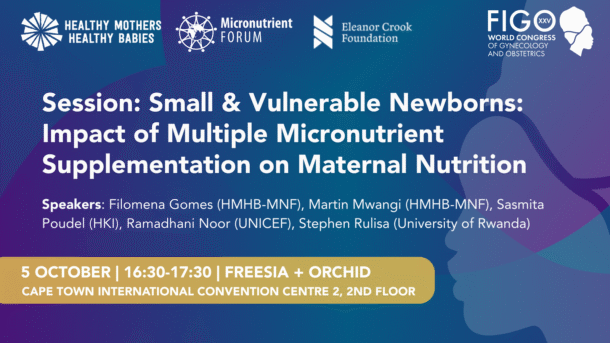
Technical Session hosted by HMHB
At FIGO 2025, HMHB convened a high-impact scientific session, “Small & Vulnerable Newborns: Impact of Multiple Micronutrient Supplementation on Maternal Nutrition,” highlighting MMS as one of the most cost-effective solutions to reduce the prevalence of small and vulnerable newborns, affecting one in four live births globally. Country case studies from Nepal and Ethiopia demonstrated how MMS can be effectively integrated into national antenatal care systems, reinforcing its feasibility and scalability in low- and middle-income countries.
Key Messages from the Tehnical Session
The key messages from the session “Small & Vulnerable Newborns: Impact of Multiple Micronutrient Supplementation on Maternal Nutrition”, on 5 October included:
- Small and vulnerable newborns (SVN) account for one in every four babies born alive and account for more than half of neonatal deaths.
- A prenatal multiple micronutrient supplement (MMS) is one of the eight proven interventions that could prevent 5.2 million SVN/year.
- MMS is a cost-effective intervention that reduces negative birth outcomes, as well as early infant growth, while improving maternal nutrition and their health.
- The WHO/UNICEF core antenatal nutrition package (micronutrients, calcium where needed, Balanced Energy and Protein (BEP) Dietary Supplementation where indicated, and counselling) is evidence-based and addresses causal pathways to reduce SVN.
- UNIMMAP MMS* is a high-value addition to that package. Implementation requires concurrent action on policy, supply, ANC systems, and financing, as well as robust implementation research to bridge the gap to scale.
- Country experiences from Nepal and Ethiopia demonstrated that embedding MMS into national ANC systems is feasible, effective, and scalable when supported by evidence and coordinated policy engagement. Two country experiences of MMS implementation were shared by Sasmita Poudel (Helen Keller International, Nepal) and Dr. Ramadhani Noor (UNICEF, Ethiopia):
- Nepal´s MMS implementation journey involves policy and multi-level stakeholder engagement, as well as evidence-driven decisions that include ongoing implementation studies assessing adherence, acceptability, and packaging. Nepal found that embedding MMS within existing systems eases transition to MMS.
- Ethiopia implemented the largest MMS demonstration program in Africa to reach ~ 400,000 pregnant women. Using the existing antenatal care (ANC) system, MMS implementation included capacity building for more than 14,000 health workers, counselling flip charts, centralized reporting systems, supply chain systems, and market shaping for the introduction of MMS UNIMMAP formulation. An RCT was conducted to evaluate effectiveness, coverage, and cost-effectiveness; local production of MMS is being studied,d and a costed roadmap to scale up MMS by 2030 was developed.
This session showed that the reduction of the high prevalence of SVN is possible, with prenatal MMS being one of the key preventative and cost-effective interventions that several countries are implementing. Other key nutrition-based interventions are needed, and these need to be fully integrated into ANC services, calling for a close collaboration between FIGO and nutrition societies. The final call to action included the need to work together to ensure that every baby has a chance to be born alive, at the right time, and the right size.
*UNIMMAP stands for United Nations International Multiple Micronutrient Antenatal Preparation, which is a specific, evidence-based formula for a prenatal vitamin and mineral supplement for pregnant and breastfeeding women.
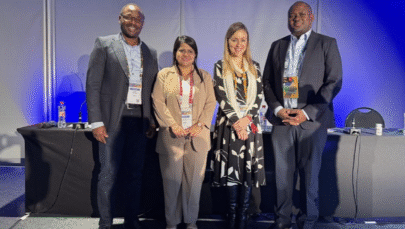
Presenters of the HMHB Session at FIGO 2025

Global Adovcacy and Alignment with FIGO Recommendations
The Congress coincided with the release of FIGO’s Good Practice Recommendations on Anemia in Pregnancy (Int J Gynaecol Obstet, 2025), which strongly endorse MMS for pregnant women in low- and middle-income countries. This landmark endorsement, closely aligned with WHO and UNICEF guidance, marks a major milestone for maternal nutrition advocacy.
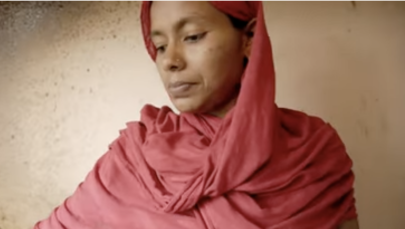
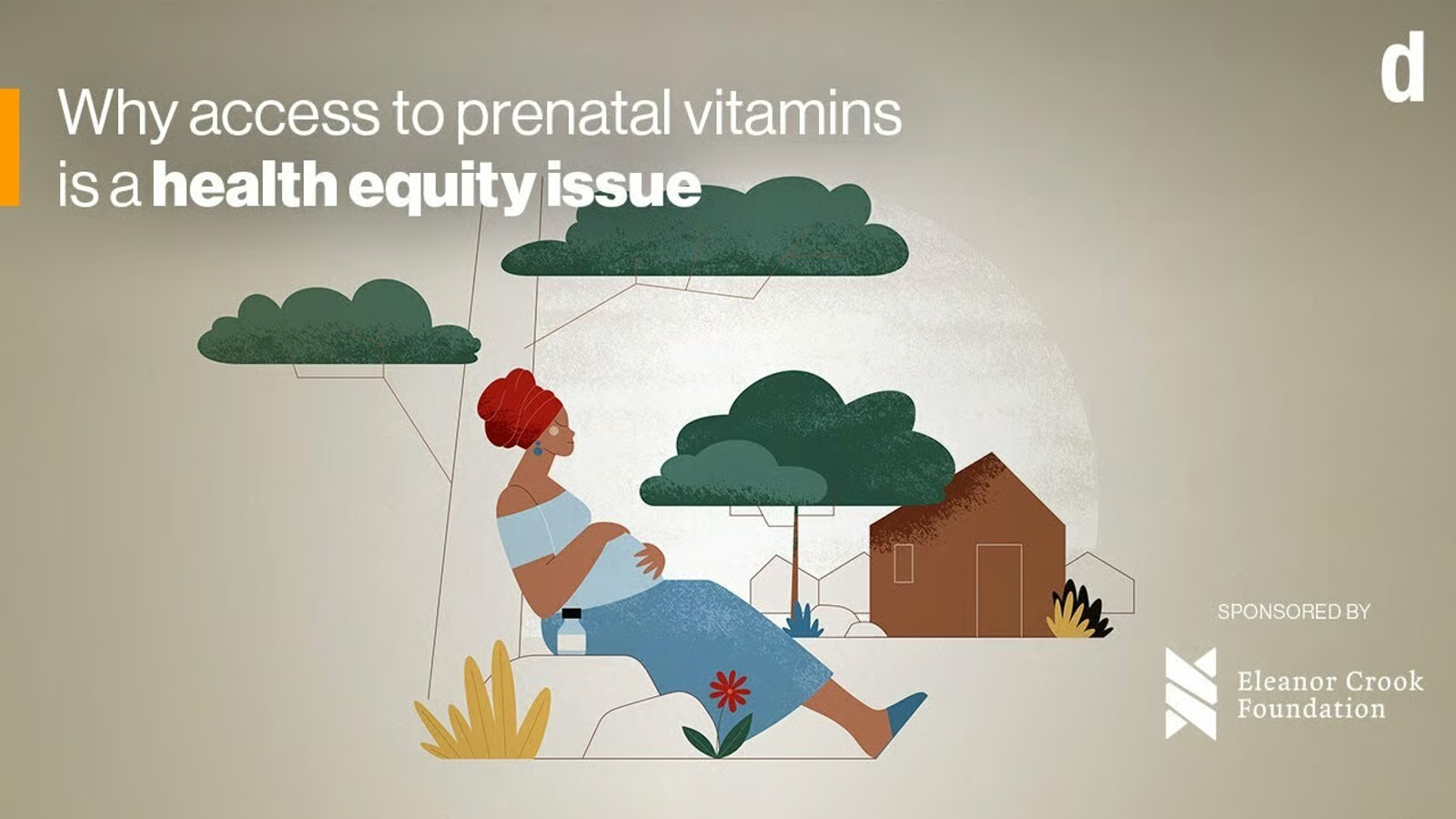
Complementing the technical session, HMHB also showcased two powerful advocacy films—“Women’s Voices from Bangladesh” and “Unlocking a Healthier Future: Maternal Nutrition & Increased Access to Prenatal Multivitamins.” The films, produced with support from ECF and global partners, captured the lived experiences of women during pregnancy and underscored the urgent need to close the gap in access to MMS.
The two MMS advocacy films were featured in the session “Building a Healthier Tomorrow: Transforming Maternal Care through Nutrition, Respect, and Access in Bangladesh, Colombia, and Beyond” on 8 October 2025. Both films resonated strongly with audiences and amplified the call for donor and government investment in equitable access to MMS.
The first film showed the hard reality faced by millions of women in Bangladesh and how women, when given access to MMS, seize the chance to build stronger futures for themselves and their children. The second film highlighted the abundance of prenatal care in wealthier/ resource-rich settings with the stark challenges faced by women in resource-limited environments, including those navigating pregnancy amid food insecurity and conflict. Both films end with an urgent call to governments, donors, and health leaders to invest in MMS and help close the gap in prenatal care and ensure that every woman, everywhere, has access to the vitamins she needs for a safe and healthy pregnancy.
Films
Partnerships and Co-funding
Through its participation, HMHB strengthened cross-sector collaboration between the nutrition and obstetrics communities, catalyzed new partnerships, including with FIGO leaders and representatives from Kenya, Rwanda, Nepal, and Ethiopia, and reaffirmed its role as a trusted global platform connecting science, policy, and practice for maternal health. The ECF-supported initiative demonstrated the high impact of strategic, short-term investments in scientific advocacy. Building on this momentum, HMHB will continue to engage with professional associations, ministries of health, and partners to support the implementation of FIGO’s new recommendations and advance equitable access to MMS worldwide.