

7 October 2026 – The 7th Micronutrient Forum (MNF) Global Conference, themed “Nutrition at the Frontiers of a Changing Environment,” took place in Accra, Ghana, and online, from 28 September to 1 October 2026. More than 2300 participants from 119 countries across nutrition, health, agriculture, climate, and development sectors gathered to discuss nutrition solutions in the face of climate change, funding constraints, and humanitarian challenges. The conference concluded with the Way Forward statement and a powerful Call to Action in the Closing Ceremony.
VIEW THE WAY FORWARD STATEMENT AND CALL TO ACTION
READ THE DEVEX SPECIAL EDITION: 5 KEY TAKEAWAYS FROM MNF2026
Maternal nutrition and multiple micronutrient supplementation (MMS) featured prominently, with several dedicated sessions exploring the latest evidence, implementation experiences, and opportunities to scale impact. Bringing together researchers, policymakers, implementers, and donors, these discussions advanced efforts to strengthen health systems, expand access to MMS, and improve nutrition outcomes for women and newborns.
VIEW THE INTERACTIVE ONLINE PROGRAM

LOG IN TO THE VIRTUAL PLATFORM TO WATCH THE RECORDINGS
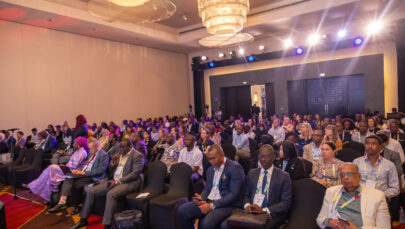
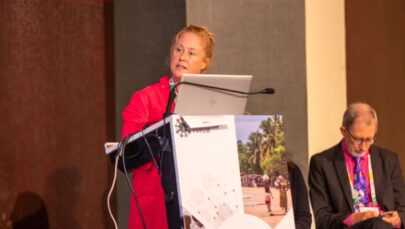
Photo credit: © Micronutrient Forum/FLLASH.
Sessions Featuring HMHB with Partners
-
Organized by Helen Keller Intl
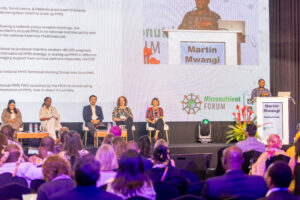
- Monica Fox (Vitamin Angels): Uganda’s experience demonstrates that government leadership, stakeholder engagement, implementation research, and early integration of MMS into national policies and systems are critical for building the evidence, financing, and institutional support needed for nationwide scale-up.
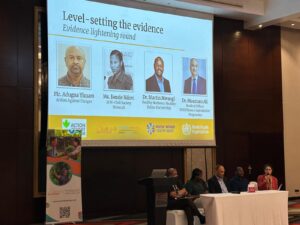
- Martin Mwangi (Healthy Mothers Healthy Babies Consortium): MMS scale-up is gaining significant momentum globally, with 48 countries exploring or implementing MMS and 20 countries in Africa receiving active support, demonstrating growing commitment to improving maternal nutrition through evidence-based interventions.
- Auliya A. Suwantika (Universitas Padjadjaran, Indonesia and Vitamin Angels): For MMS programs to achieve sustainable scale, countries must go beyond demonstrating cost-effectiveness and use implementation science and budget impact analyses to inform context-specific financing, pricing, procurement, and rollout strategies.
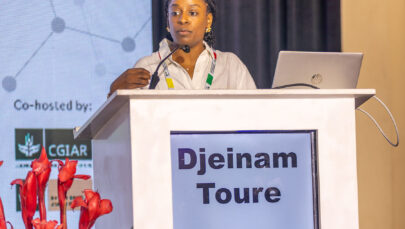
- Djeinam Toure (Helen Keller Intl): Women strongly prefer receiving a full 180-day MMS supply, but affordability remains a key determinant of uptake, highlighting the need for supportive policies, tax exemptions, subsidies, and integration into routine ANC to improve access and adherence.
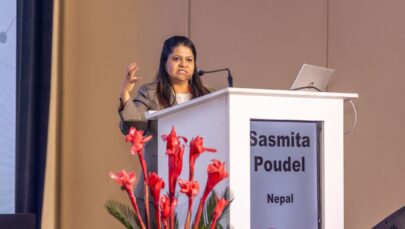
- Sasmita Poudel (Helen Keller Intl Nepal): Nepal’s experience shows that country-generated implementation evidence, combined with coordinated planning across policy, financing, supply chains, monitoring, and health systems, can successfully support the integration and scale-up of MMS within routine antenatal care.
- Rebecca Heidkamp (Johns Hopkins Bloomberg School of Public Health): As MMS programs expand, countries must strengthen monitoring systems, supply chain management, and data use through improved indicators, digital tools, and health information systems to effectively track adherence, coverage, and product availability.
-
Organized by Family Larsson-Rosenquist Foundation (FLRF)

- Katharina Lichtner (FLRF): The priority is to turn existing breastfeeding guidance into practical tools, SOPs, and implementation roadmaps that frontline workers can use effectively during humanitarian emergencies.
- Dr. Zulfiqar Bhutta (Aga Khan University/Hospital for Sick Children, Toronto): Breastfeeding support should be embedded within humanitarian responses, with targeted interventions for the most vulnerable mothers and infants and stronger operational guidance for crisis settings.
- Georgia Dominguez (SickKids Centre for Global Child Health): Because humanitarian crises differ widely, breastfeeding support must be context-specific; ongoing research is identifying key barriers and support needs to inform practical guidance.
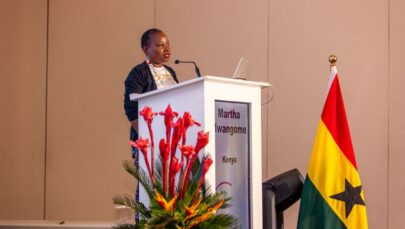
- Martha Mwangome (KEMRI Wellcome Trust Research Programme): Evidence on MMS during lactation remains limited and focused mainly on nutrition outcomes, highlighting the need for standardized measures of maternal health and wellbeing.
- Martin Mwangi (HMHB Program Lead): MMS during lactation appears safe, but additional evidence is needed to identify who benefits most and to develop operational guidance for country-level implementation and scale-up.
Moving from evidence to implementation is now the priority, with stronger operational guidance needed to support both breastfeeding and maternal micronutrition interventions in diverse humanitarian settings.
-

- Ramadhani Noor (UNICEF Ethiopia): Ethiopia successfully transitioned MMS from policy to practice by making it the national ANC standard, reaching over 600,000 pregnant women through strong government leadership and stakeholder collaboration. A costed roadmap aims for nationwide scale-up by 2030, with investments in sustainable financing, local production, and health system strengthening.
- Filomena Gomes (HMHB): MMS is safe and beneficial for most pregnant women with conditions such as anaemia, HIV, TB, malaria, hypertension, diabetes, obesity, and sickle cell disease, and should generally not be withheld from these groups.Some high-risk conditions require additional clinical management and tailored supplementation alongside MMS.
- Seifu H. Gebreyesus (Addis Ababa University, School of Public Health, Ethiopia): Ethiopia’s MMS demonstration program showed high adherence among pregnant women, demonstrating that MMS can be successfully implemented in routine settings. Findings underscore the need for standardized and reliable adherence measurement as MMS programs scale.
- Paul Elish (Johns Hopkins University, USA): Providing women with a full MMS supply at their first ANC visit significantly increased supplement access and consumption, while simple adherence supports such as counselling and SMS reminders were highly effective. Late ANC enrollment remains a major barrier to maximizing MMS benefits.
- Sasmita Poudel (Helen Keller International, Nepal): The NAMASTE-MMS trial confirmed that MMS performs as well as IFA for adherence and ANC attendance under real-world conditions. High acceptability across packaging formats supports Nepal’s planned transition from IFA to MMS.
- Nidhi Shrestha (Johns Hopkins University, USA): Providing a full 180-count MMS bottle upfront did not reduce ANC attendance and can support efficient MMS delivery. District-level health system factors had a greater influence on ANC attendance than packaging or counselling approaches.
- Jacqueline W. Muteti (KEMRI-Wellcome Trust): Anaemia remains highly prevalent among women before pregnancy, highlighting the need for earlier nutrition interventions. Iron-containing MMS improved haemoglobin levels and reduced anaemia, with the greatest benefits seen among moderately anaemic women.
- Atkure Defar (London School of Hygiene & Tropical Medicine): The health impact of MMS depends not only on distribution but also on effective coverage, including quality counselling, early ANC attendance, and sustained adherence. Strengthening supply chains and tracking the full coverage cascade are essential for maximizing program effectiveness.
- Justine Kavle (Kavle Consulting): Foreign aid cuts have disrupted nutrition services, weakened community outreach, and reduced trust in humanitarian settings, highlighting the vulnerability of nutrition programs to funding shocks. Sustainable MMS scale-up will require stronger community platforms, government ownership, frontline worker support, and robust monitoring systems to maintain coverage, adherence, and program quality during crises.
Country experiences show that successful MMS scale-up depends on strong government leadership, sustainable financing, effective coverage, and health systems that support early ANC attendance, counselling, adherence, and reliable supply chains. As countries transition from evidence generation to implementation, building community trust, strengthening frontline and community platforms, and ensuring resilient delivery systems are critical to sustaining MMS access and impact, particularly in humanitarian and resource-constrained settings.
-
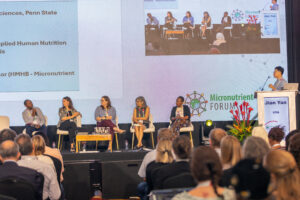
Speakers: Jian Yan (Gates Foundation, USA), Parul Christian, Kerry J. Schulze, Sulagna Bandyopadhyay and Heyjun Park (Johns Hopkins Bloomberg School of Public Health, USA), Towfida Jahan Siddiqua (International Centre for Diarrhoeal Disease Research, Bangladesh [icddr,b], Bangladesh), Martha Kaeni Mwangome (KEMRI-Wellcome Trust Research Programme, Kenya), Christine P. Stewart (University of California, Davis, USA), Alison Gernand (Pennsylvania State University, USA) and Martin Mwangi (Healthy Mothers Healthy Babies Consortium)
This session focused on findings from the Micronutrient Dose Response Trials (MiNDR) in Bangladesh and Kenya and their implications for optimizing MMS formulations for women of reproductive age and pregnant women in LMICs.
Speakers highlighted that while MMS during pregnancy had been shown to benefit both mothers and newborns, a standard one-a-day formulation providing one Recommended Dietary Allowance (RDA) did not fully address persistent micronutrient deficiencies in undernourished populations.
- Dose-response trials conducted in Bangladesh and Kenya examined whether providing higher-than-RDA levels of specific micronutrients improved nutrient sufficiency among women of reproductive age and pregnant women.
- Findings explored the micronutrient doses at which adequate nutritional status was achieved, using biomarkers to assess responses across different nutrients.
- The session discussed how these results could inform future nutrient requirements and support the development of more effective MMS formulations for pregnant women and women of reproductive age in low- and middle-income countries.
- Speakers also examined the strengths and limitations of different biochemical indicators of nutritional status, including their usefulness for assessing short- versus long-term status and for determining optimal nutrient doses.
Emerging evidence suggested that higher micronutrient doses than those currently included in standard MMS formulations might be needed to achieve nutritional sufficiency in settings with widespread and chronic deficiencies, underscoring the importance of refining future MMS formulations based on biomarker evidence.
-
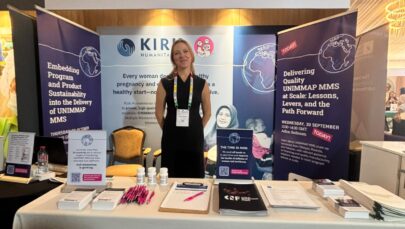
Organized by Kirk Humanitarian
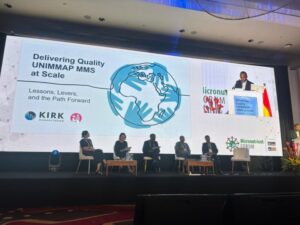
- Anteneh Minas (UNICEF Pakistan): Pakistan scaled up MMS by combining local evidence, strong policies, and integration into health and social protection systems, supported by growing government ownership and financing. Humanitarian responses, including the 2022 floods, provided valuable lessons that accelerated implementation and expansion.
- Samson Desie (UNICEF Rwanda): Rwanda rapidly transitioned from evidence generation to nationwide MMS scale-up by embedding MMS within routine antenatal care and broader maternal health strategies. Strong government leadership, domestic financing, and health system integration were key to sustainability and universal access.
- Sisay S. Boltena (SUN Focal Person, Ethiopia): Ethiopia demonstrated that integrating MMS into routine ANC, training, procurement, and distribution systems can support sustainable institutionalization and high adherence. Expanding early ANC attendance and securing long-term financing and supply chains remain critical challenges for scale-up.
- Alison Fleet (UNICEF Supply Division): Successful local MMS manufacturing depends on predictable country demand, adequate production volumes, quality-assured manufacturing capacity, and strong regulatory systems. Regional manufacturing models may be more viable where individual country demand is insufficient to sustain local production.
- Federica Margini (Child Nutrition Fund): The Child Nutrition Fund helps countries accelerate MMS scale-up through matching funds that leverage and increase domestic investments in nutrition. Sustainable progress requires government leadership, with countries gradually transitioning from donor-funded pilots to nationally financed programs.
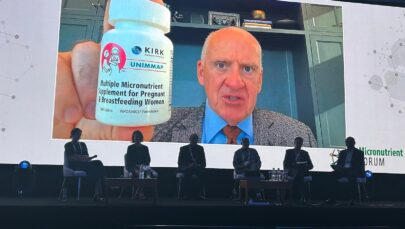
- Spencer Kirk (Kirk Humanitarian): UNIMMAP MMS is a proven, affordable intervention that is ready for large-scale implementation, with the evidence, policy tools, and financing mechanisms already available. Countries should act now rather than wait for perfect conditions, focusing on healthier mothers and newborns as the ultimate measure of success.
- Martin Mwangi (HMHB Consortium): Investing in maternal nutrition generates benefits across the life course, improving maternal health, birth outcomes, child development, and national productivity. Scaling MMS successfully requires maintaining product quality, strengthening country ownership, and building sustainable systems that ensure access to high-quality supplements.
Experiences from Pakistan, Rwanda, and Ethiopia demonstrated that MMS scale-up was most successful when integrated into routine health systems, supported by strong government leadership, sustainable financing, and domestic ownership.
Quality-assured products, resilient supply chains, effective financing mechanisms, and country-led implementation emerged as the key foundations for achieving large-scale impact in maternal and newborn health.
-

- Filomena Gomes (HMHB Consortium): MMS during pregnancy was highlighted as a cost-effective intervention that improved birth outcomes, reduced the risk of small and vulnerable newborns, and supported infant growth and micronutrient status. Limited evidence suggested that continuing MMS during lactation was safe and potentially beneficial, although pregnancy remained the highest-priority period for intervention.
- Parul Christian (Johns Hopkins Bloomberg School of Public Health): UNIMMAP MMS continued to demonstrate strong effectiveness and value for money, supporting ongoing global scale-up efforts. Current formulations improved micronutrient status but did not eliminate all deficiencies, underscoring the need for further research on nutrient requirements and dosing.
- Martin Mwangi (HMHB Consortium): Successful MMS scale-up depended on integration into routine ANC systems, with investments in supply chains, counselling, health worker capacity, and monitoring. Across countries, adherence emerged as the ultimate measure of success, requiring sustainable financing, effective counselling, and tracking of effective coverage.
- Caleb Sagam (KEMRI): Micronutrient deficiencies remained common throughout pregnancy and continued into the postpartum period, highlighting persistent nutritional gaps across the maternal continuum. Findings supported moving beyond single-nutrient approaches toward comprehensive, multi-micronutrient strategies for maternal nutrition.
- Jo-Anna Baxter (University of Toronto): Continuing MMS through six months postpartum was associated with improved child cognitive outcomes and lower stunting rates at five years of age. The findings suggested that maternal nutrition during breastfeeding may have important long-term benefits for child development, warranting further investigation.
Evidence reinforced that UNIMMAP MMS remained one of the most effective and cost-effective interventions for improving maternal and newborn outcomes and should continue to be scaled up globally.
Emerging evidence suggested that benefits may extend beyond pregnancy into the postpartum period, while future research should focus on optimizing formulations, addressing persistent deficiencies, and improving effective coverage and adherence.
-
Post-conference meeting organized by PAI and HMHB. Overview Brief.
Integrating Nutrition and Family Planning
- Nutrition and family planning are interconnected and should be delivered together to provide more comprehensive, responsive care for women, adolescents, children, and families.
- Integration should move from concept to practice, with stronger documentation of implementation experiences and lessons learned to inform future programming.
- Family planning, nutrition, and ANC services should be connected through coherent, integrated programs rather than delivered through separate systems.
- Research and service delivery should be better aligned, with greater emphasis on demonstrating the impact and cost-effectiveness of integrated approaches.
- Advocacy and messaging are essential, as malnutrition cannot be addressed effectively without also tackling early, closely spaced, and unintended pregnancies.
- Communities should be at the center of integrated program design, implementation, and monitoring, with stronger community leadership and ownership.
- Strong governance and leadership are critical for creating the enabling environment needed to integrate nutrition and family planning across policies, programs, financing,and health systems.
- Collaboration across governments, donors, civil society, researchers, health providers, and development partners is needed to champion, resource, implement, and evaluate integrated approaches.
- Implementation experiences should guide future integration efforts, ensuring that evidence is translated into practical action and sustainable service delivery.
- Financing and policy mechanisms should support integration, embedding nutrition and family planning within routine health systems and investment frameworks.
- The shared goal is to ensure that women, adolescents, children, and families have access to coordinated, high-quality nutrition and family planning information, services, and support that respond to their needs and priorities.
Priority Opportunities Identified
- Establish joint working groups involving governments, donors, and civil society to advance integrated service delivery.
- Generate stronger evidence on the impact and value of integration to build the investment case.
- Leverage existing financing platforms and policy entry points to support integrated nutrition and family planning programs.
Action Statement
- Participants called for a shared commitment to ensure that women, adolescents, children, and families have access to coordinated, high-quality nutrition and family planning information, services, and support that respond to their needs and priorities.
Photos


Key Messages on MMS
-
- MMS scale-up is gaining momentum globally, with 48 countries exploring or implementing MMS and 20 countries in Africa actively supported by HMHB and partners.
- MMS remains one of the most cost-effective maternal nutrition interventions, improving maternal nutrition, birth outcomes, and newborn health.
- The focus should shift from proving MMS works to accelerating adoption, implementation, and sustained delivery at scale.
- Countries do not need to wait for perfect conditions to begin scaling MMS.
-
- MMS should be integrated into routine antenatal care (ANC), national health systems, and government budgets rather than implemented through parallel programs.
- Successful scale-up depends on strong supply chains, supportive policies, procurement systems, health worker training, counselling, monitoring, and accountability mechanisms.
- Country experiences from Ethiopia, Nepal, Pakistan, Rwanda, Uganda, and others demonstrate that government leadership and health system integration are critical for success.
- Better data systems are needed to monitor coverage, adherence, stock availability, and program performance as scale-up expands.
-
- Affordability is as important as cost-effectiveness. Countries need financing strategies, budget impact analyses, targeted subsidies, and tax exemptions to ensure equitable access.
- Women consistently prefer receiving a full 180-day supply of MMS, which improves convenience and supports adherence.
- Evidence from multiple countries shows strong acceptability, high adherence, and improved haemoglobin outcomes when women receive adequate counselling and uninterrupted access to MMS.
- Scaling MMS successfully requires keeping women’s needs and preferences at the centre of program design and delivery.
-
- Maternal nutrition interventions should be tailored to local needs, including the targeted use of Balanced Energy and Protein (BEP) supplementation where maternal undernutrition is prevalent.
- Anaemia remains a major public health challenge and requires coordinated action across health, nutrition, education, food systems, social protection, and WASH sectors.
- Emerging evidence indicates that MMS is safe and beneficial for most pregnant women, including those with common health conditions, although some groups require additional clinical management.
- New research suggests potential benefits of extending MMS into the postpartum period, while additional evidence is needed on MMS use during lactation.
- Ongoing evidence reviews and guideline updates will continue to inform policy and program design.
-
- Sustainable scale-up requires continuous monitoring, adaptation, and investment, not one-time implementation efforts.
- Quality-assured, affordable MMS products are essential and should be supported by strong regulatory systems, reliable supply chains, predictable demand, and local manufacturing capacity where feasible.
- MMS should be distributed in its original pharmaceutical-grade 180-count packaging and should not be repackaged, as this can compromise product quality and potency.
- Experiences from UNRWA and other large-scale programs show that performance monitoring, inventory management, dashboards, and routine supervision are critical for sustaining impact.
- Long-term success depends on maintaining both program quality and adherence throughout pregnancy.
Call to Action: Scale Up MMS Now
Integrate, finance, and scale quality MMS programs now. Governments, donors, implementers, researchers, and manufacturers should work together to embed MMS within routine ANC systems, ensure sustainable financing, maintain product quality, support adherence, and invest in maternal nutrition as a foundation for healthier mothers, healthier children, and stronger economies.
Videos

All Maternal Nutrition and MMS Sessions and Symposia
-
- Oral Abstract Presentation Session: The Scaling Up of MMS – Country experiences in Nepal, Cambodia, Kenya, and Senegal
29 September 2026 | 13:40-15:10 | Stafford Room | Moderated by Filomena Gomes, HMHB-MNF
- Financing for Nutrition in Uncertain Times
29 September 2026 |15:40-17:10 | Adlon Ballroom | Moderated by Abigail Perry, World Bank - Building Better Bridges: Integrated Delivery of Nutrition, Family Planning, and Maternal and Child Health Programming for Expanded Impact
30 September 2026 | 08:40 – 10:40| Stafford | Moderated by Elaine Menotti - Driving Demand for Nutritious Foods
30 September 2026 | 10:40-12:10 | Stafford | Moderated by Paulina S. Addy - Advancing Micronutrient Security through Integrated and Equitable Health Systems: Evidence, Innovation, and Impact
30 September 2026 | 10:40-12:10 | Adlon 2 | Moderated by Mai Hoang, Helen Keller Intl - Micronutrient Interventions to Improve Pregnancy Outcomes: Where Next with UNIMMAP?
30 September 2026 | 14:40-16:10 | Stafford | Moderated by Marth Mwangome/Kenya Medical Research Institute (KEMRI) and Wellcome Trust - Beyond Iron Intake: Blood Loss, Anaemia, and Implications for Treatment and Policy
1 October 2026 | 10:10-11:40 | Adlon 1 | Moderated by Lisa Rogers, WHO - Turning Evidence into Practice: Uganda’s Journey to Integrate Multiple Micronutrient Supplements into National Systems
1 October 2026 | 11:50 – 12:50 | Stafford | Rapid Fire Session: Track C | Oral presentation by Dr Samalie Namukose - Stronger Together: Advancing a Shared Agenda for Family Planning, Nutrition, and Maternal and Child Health
2 October 2026 | 8:00 – 13:00 | Mövenpick Hotel Ballroom, Accra, Ghana | Post-conference event hosted by PAI and HMHB
- Oral Abstract Presentation Session: The Scaling Up of MMS – Country experiences in Nepal, Cambodia, Kenya, and Senegal
-
- Scaling What Works: Country-Led Breakthroughs in MMS For Stronger Maternal Health Systems
28 September 2026 | 09:00 – 10:30 | Adlon 2 | Organized by Helen Keller Intl - Maternal Micronutrient Status and Adverse Birth Outcomes: Findings from the MOMI Multi‑Omics Study.
28 September 2026 | 9:00-11:00 | Adlon 3 | Organized by Emory University - Improving maternal-newborn outcomes through effective actions in nutrition: key findings from the maternal and infant nutrition and growth (MiNG) exemplars in global health project.
28 September 2026 | 11:00–12:30 | Adlon 2 | Organized by Hospital for Sick Children - Increasing Climate Resilience Through Health System Strengthening and Nutrition Action
28 September 2026 | 11:00 – 12:30 | Adlon 1 | Organized by Vitamin Angels - From Guidance to Action: Accelerating Country Implementation for Improved Complementary Feeding.
28 September 2026 | 13:30-15:00 | Adlon 3 | Organized by UNICEF - Evidence to action: advocacy tools to integrate gender equality and nutrition into agri-food and climate actions
28 September 2026 | 13:30-15:00, Adlon 1 | Organized by World Vision/ST4N - From Evidence to Action: Tools and Partnerships to Accelerate Maternal Nutrition and Anemia Reduction.
29 September 2026 | 07:30-09:00 | Adlon 1 | Organized by WHO - Nutrition at the frontiers of a changing environment: country-led solutions across the maternal and child nutrition continuum.
29 September 2026 | 09:30–11:00 | Stafford | Organized by Helen Keller Intl -
Operationalizing Breastfeeding Across Health Systems: Humanitarian Emergencies And Maternal Micronutrition
29 September 2026 | 09:30–11:00 | Adlon 2 | Moderated by Michaela Turan | Organized by The Family Larsson-Rosenquist Foundation (FLRF) - Micronutrient Dose Response Trials: Determining Optimal Doses to Achieve Micronutrient Sufficiency Status Among Women in Undernourished Settings
30 September 2026 | 08:40 – 10:40| Adlon 2 | Moderated by Jian Yan and Parul Christian | Johns Hopkins University - Better Together: Innovative Collaboration for Nutrition Impact
30 September | 08:40–10:10 | Adlon 3 | Organized by The Church of Jesus Christ of Latter-Day Saints - Delivering Quality UNIMMAP MMS at Scale: Lessons, Levers, and the Path
30 September 2026 | 13:30-14:30 | Adlon Ballroom | Organized by Kirk Humanitarian and moderated by Martin Mwangi, HMHB-MNF - Catalyzing Scaled and Sustained Nutrition Impact: A New Model for Strategic Philanthropic Partnerships
30 September 30 | 12:20 – 13:20 | Capitol Room | Organized by Stronger Foundations for Nutrition, Eleanor Crook Foundation and the World Bank - Menstrual and Postpartum Bleeding Control to Improve Women’s Iron Status
1 October, 07:30–08:30, Adlon 3 | Organized by ETH Zurich/Wageningen University - Stop the Loss: Heavy Menstrual Bleeding and Anaemia in Girls and Women
1 October 2026 | 8:40 -9:40 | Adlon 3 | Organized by Sight and Life - Embedding Program and Product “Sustainability” into the Delivery of UNIMMAP MMS
1 October 2026 | 08:40-09:10 | Capitol | Organized by Kirk Humanitarian - From Commitment To Action: Government Leadership For Sustainable Nutrition In Ghana
1 October 2026 | 08:40-09:40 | Adlon 1 | Organized by Eleanor Crook Foundation and WOMEC
- Scaling What Works: Country-Led Breakthroughs in MMS For Stronger Maternal Health Systems
Resources from Partners
-
Evidence. Implementation. Health Across Generations. Vitamin Angels
At the Micronutrient Forum 7th Global Conference, Vitamin Angels shared findings from implementation research and country experiences that demonstrate how evidence can inform stronger nutrition programs for women and children around the world.
Vitamin Angels Exhibition Booth: 22B
-
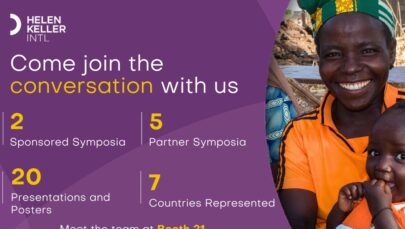
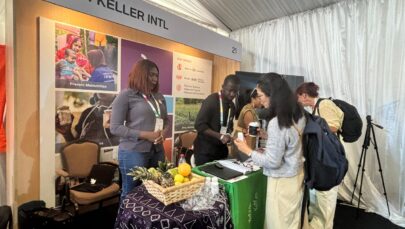
Evidence from Seven Countries. Helen Keller Intl.
At the Forum, Helen Keller colleagues shared country experience and evidence, contribute to technical discussions, connect with partners, and explore practical approaches for advancing equitable and sustainable nutrition programming
Helen Keller Intl Exhibition Booth: 21
-
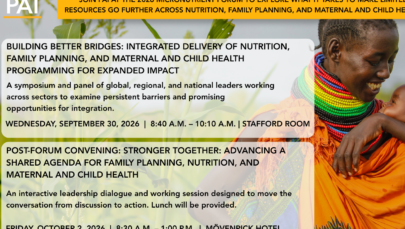
The Case for Integration. Reaching More with Less. PAI
At the 2026 Micronutrient Forum Global Conference, PAI brought together global, regional, and country leaders to explore how more integrated approaches can improve efficiency, expand coverage, and better meet the needs of women, families, and communities.