

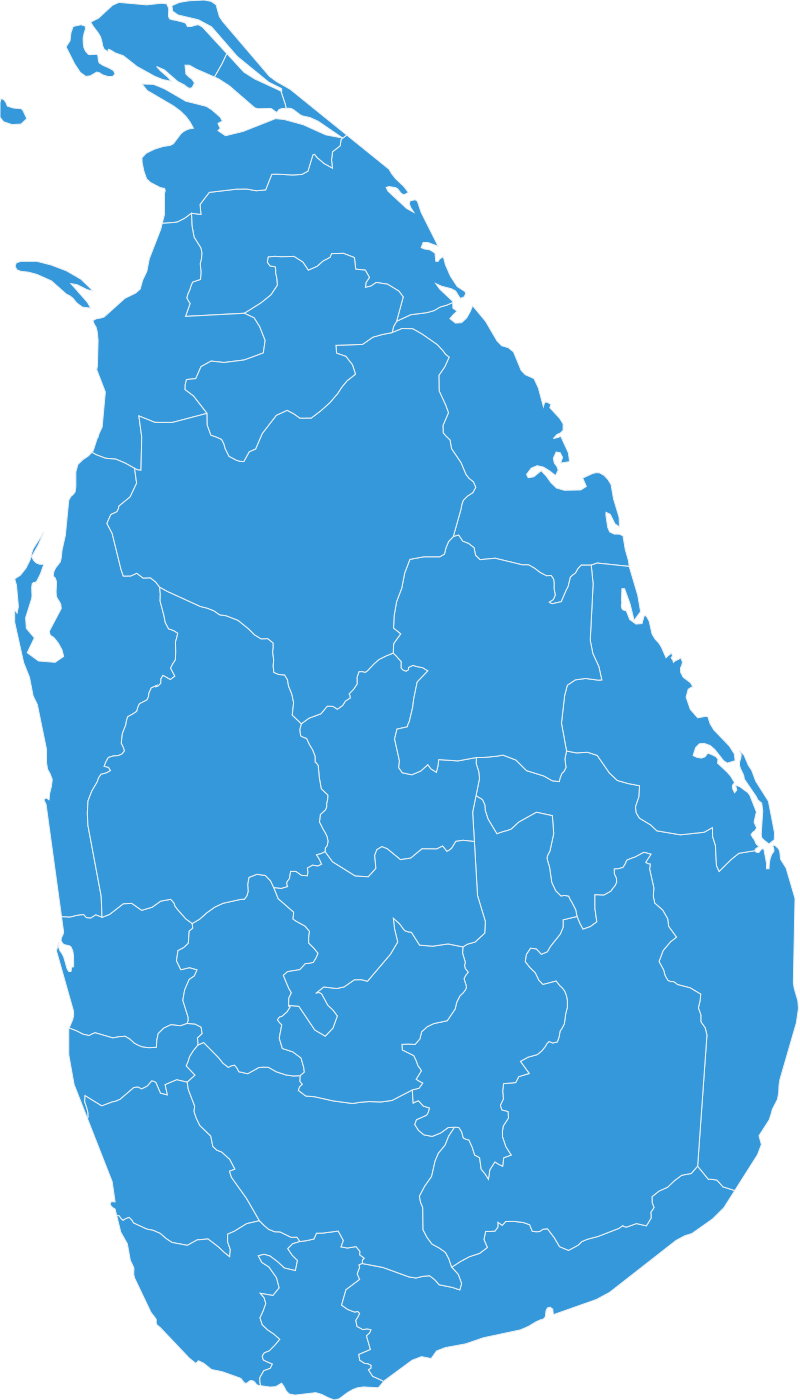
Health Indicators
Programs
Download PDFSummary: Phase 3. Scale-up delivery at the national or sub-national level
Sri Lanka has established a robust framework for maternal healthcare, distinguishing itself through the comprehensive, nationwide implementation of Multiple Micronutrient Supplementation (MMS). Since 2023, the government has formally integrated MMS into its National Maternal Care Programme, ensuring it is a standardized component of prenatal care. Additionally, Sri Lanka revised its Basic Maternal Care (BMC) Guide to provide evidence-based guidance for pre-pregnancy, antenatal, and postnatal care.
As part of the UNICEF Maternal Nutrition Acceleration Plan, Sri Lanka is receiving specialized packages of nutrition services, including MMS. Sri Lanka paired its MMS scale-up with national implementation research. Completed in the second quarter of 2026, the findings will refine MMS uptake, storage, distribution, and information systems.
To ensure the long-term success of its efforts, various stakeholders are actively engaged in strengthening program implementation, focusing on supply chain efficiency and capacity building. Additional technical and financial assistance is required to fully integrate MMS into national health financing schemes and secure the program’s sustainability for the future.
Source: HMHB Survey 2025 (updated in 2026).
Dashboard
Policy and Regulatory Status
Implementation Status
Coverage and Utilization
Key Program Actors and Partners
Supply Chain
Challenges and Next Steps
Tools and Resources
Summary: Phase 4. Sustained scale-up & integration
Sri Lanka has been implementing BEP supplementation for pregnant and lactating women at the national level since 1973. Sri Lanka addresses maternal thinness through national guidelines requiring BMI assessments during pregnancy. Women with low BMI or poor weight gain receive targeted support, including nutrition counseling, dietary supplements like Thriposha, and regular follow-ups.The program also involves family counseling and referrals if weight gain remains inadequate.
The intervention is provided in the form of a fortified cereal/flour such as CSB Plus, known as “Thriposha.” Thriposha is produced, stored, and distributed by the local government owned company called Sri Lanka Thriposha Limited; however, it is not certified by UNICEF or WFP. All pregnant and lactating women are eligible for this intervention until six months postpartum. The supplementation is delivered through antenatal care facilities by health professionals. Last, during periods of economic crisis, other donors stepped in to facilitate the continuation of the program such as WFP or USAID.
Sources: Kissel et al. (2026) , Sethi et al. (2021) , Maternal Care Package