
Health Indicators
Programs
Download PDFSummary: Phase 1. Exploration phase to build an enabling environment
Mozambique continues to face significant nutritional challenges, including high rates of stunting and widespread micronutrient deficiencies. Progress has been made in improving childhood nutrition indicators, such as stunting, wasting, low birth weight, and childhood overweight. However, anemia remains a serious concern with a prevalence rate of 54.6 % in 2023. Additionally, the prevalence of underweight among women was recorded at 9.41% in 2022. Poor nutrition among women, especially those who are pregnant, negatively affects birth outcomes. Data on these birth outcomes, as provided on the World Health Organization’s Global Health Observatory, reported that Mozambique has a troublingly high stillbirth rate at 18.27 per 1000 total births (2023), pre-term birth at 7.3 %, low birth weight at 17.8 % in 2020, and infant mortality rate 36.91 per 1,000 live births (2022).
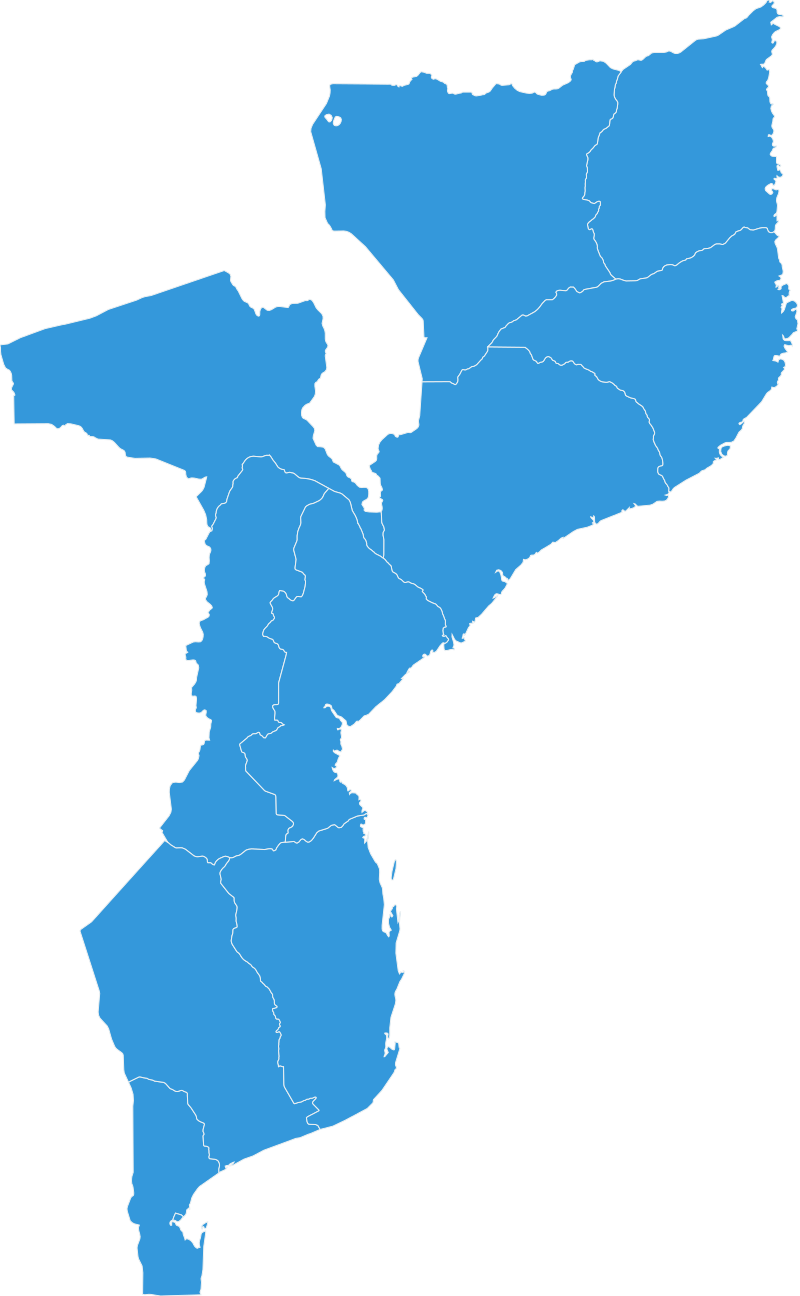
Nevertheless, the Mozambique government has been actively working for the past two decades, generating policies, plans, and guidelines to address the micronutrient deficiencies as key public health priorities. The Nutrition Intervention Package (NIP) for Mozambique was redesigned and implemented across 11 provinces. However, the focus of NIP 2018 was mostly on children under two years of age. A recent evaluation of the NIP recommends that Mozambique nutrition interventions should target pregnant women to break the intergenerational cycle of malnutrition.
In addition, Nutrition International’s (NI) policy brief laid out a compelling investment case for transitioning from Iron Folic Acid (IFA) to Multiple Micronutrient Supplements (MMS). In Mozambique, transitioning from IFA to MMS is expected to yield a 144-fold greater benefit for MMS than IFA, averting 384,443 disability-adjusted life years (DALYs) and preventing the deaths of an additional 5,002 children over 10 years. Shifting from IFA to MMS could effectively break the cycle of malnutrition in Mozambique and improve national maternal and infant health.
(Source: HMHB Survey 2021-2023, HMHB Survey 2024-2025)