

Health Indicators
Programs
Download PDFSummary: Phase 2. Initial implementation supported by implementation research
Maternal health challenges remain significant, with 35% of pregnant women in 2023 suffering from anemia, while 9.8% women 15-19 years and 5.3% women 20-49 years are underweight (DHS, 2024). While the country is making some progress in reducing wasting, and low birth weight, there has been little to no progress and even deterioration in addressing anemia prevalence.
The Health Sector Annual Progress report showed that access to essential health services, including basic ANC facilities and IFA, was poor. The combined impact of high prevalence of anemia among pregnant women and poor access to health services have a significant impact on birth outcomes
Nutrition International’s policy brief laid out a compelling investment case for transitioning from Iron Folic Acid (IFA) to Multiple Micronutrient Supplements (MMS) based on the cost-benefit tool. The analysis shows that in Malawi, transition from IFAS to MMS is expected to avert 203,774 disability-adjusted life years (DALYs) over 10 years, prevent the deaths of an additional 2,463 children and yield benefits that are 77 times greater than the cost. The policy brief highlighted the cost-effectiveness and long-term benefit of MMS compared to IFA.
Sources: HMHB Survey 2025, NutriDash, HMHB Survey (2021-23), and 2nd Africa Regional Meeting Report
Dashboard
Policy and Regulatory Status
Implementation Status
Coverage and Utilization
Key Program Actors and Partners
Supply Chain
Monitoring Evaluation and Research
Financing and Sustainability
Challenges and Next Steps
Tools and Resources
Summary: Phase 3. Policy Adoption & Early Implementation
Malawi is planning to initiate the BEP supplement intervention to address the El Niño’s wheather impact on nutritional status of women and children. Given the high prevalence of anemia among pregnant women (approximately one-third), the program aims to mitigate adverse birth outcomes, such as low birth weight, by providing nutritional supplementation such as BEP supplements to undernourished pregnant women. Currently, national-level consultations have been conducted, and a concept note has been developed to guide the implementation process.
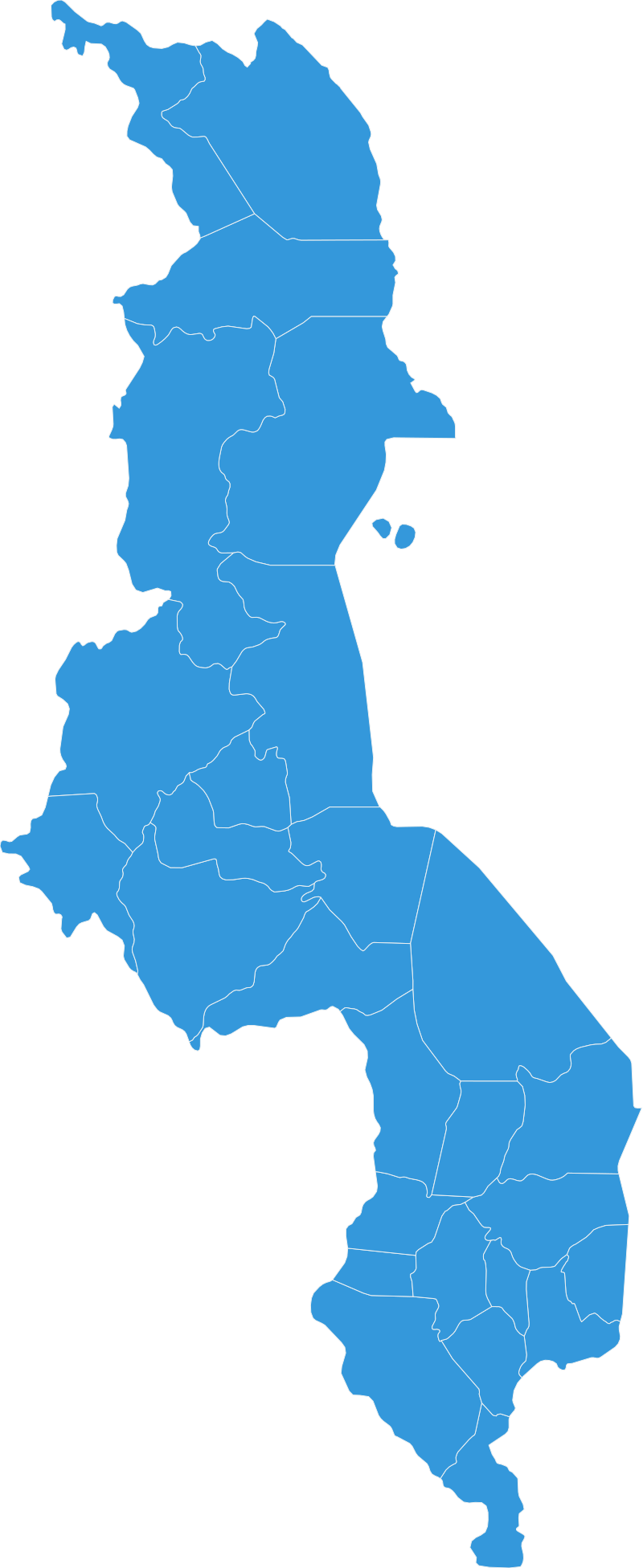
At the time of the interview (late 2024), we were informed that Malawi was planning to start implementing BEP dietary supplementation in January 2025 at a sub-national level in two districts (Nsanje and Chakwawa). In May 2025, we received an update that the Government of Malawi had officially approved the use of BEP supplements in humanitarian contexts, aligning with the WHO Antenatal Care Recommendations. The rollout will continue with an expansion to three or four more districts by August 2025, following the initial launch in the two districts targeted earlier.
This initiative is made possible with UNICEF’s support, which facilitates the importation of the BEP products in the form of Lipid-based Nutrient Supplement for Pregnant and Lactating Women (LNS-PLW). The supplement is fortified with essential vitamins and minerals (for more details, refer to the UNICEF Supply Catalogue). Multiple certified producers manufacture this product. In addition to importation, UNICEF collaborates with the Malawian government to support in-country distribution. UNICEF also plays a crucial role by actively engaging with key stakeholders, including the Malawi Red Cross Society and the Farmers Union of Malawi in supporting the implementation of the BEP supplementation program. Pregnant women eligible for the intervention will be screened using mid-upper arm circumference (MUAC) with a threshold of < 21 cm. They will receive BEP supplementation from their first antenatal care visit during pregnancy until four weeks postpartum. The intervention will be delivered by health professionals, including doctors, nurses, midwives, nutritionists, and community health workers.
Sources: Kissel et al. (2026),HMHB Survey 2025