

Health Indicators
Programs
Download PDFSummary: Phase 3. Scale-up delivery at the national or sub-national level
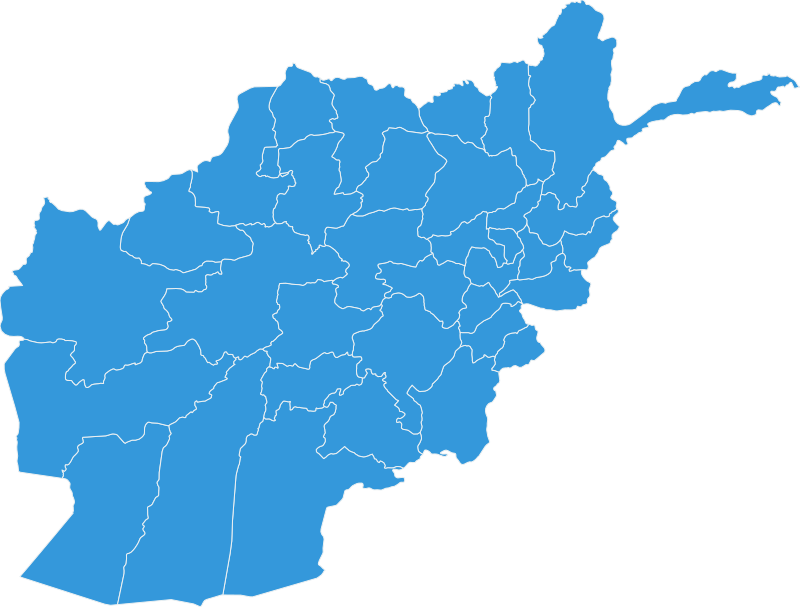
Afghanistan has advanced its efforts on MMS for pregnant women. The country actively worked on MMS and finalized a policy that incorporates MMS within broader nutrition strategies. UNICEF is working on MMS supplementation since 2022. Supply is provided as in-kind by Kirk Humanitarian and funding support by KFW and BMZ. Together with Johns Hopkins University, UNICEF is conducting implementation research on MMS. MMS is provided free of charge through the public health system. A strong coordination mechanism supports planning and implementation, and ANC facilities serve as the primary delivery platform. Advocacy and awareness activities were also undertaken, including demand creation through advocacy, communication, and social mobilization (ACSM), along with meetings, seminars, and workshops on MMS and maternal nutrition. In 2024, over 1.4 million women received MMS. Technical and programmatic support remain vital for the effective scale-up of MMS.
(Sources: HMHB Survey 2025, UNICEF NutriDash and HMHB Survey 2021-2023)
Dashboard
Policy and Regulatory Status
Implementation Status
Coverage and Utilization
Key Program Actors and Partners
Supply Chain
Monitoring Evaluation and Research
Financing and Sustainability
Challenges and Next Steps
Tools and Resources
Summary: Phase 2. Pilot/Implementation Research & Program Design
In Afghanistan, BEP supplementation scaled up significantly post-2021 as part of the humanitarian response, covering all 34 provinces.
The BEP supplement used to manage undernutrition is provided during pregnancy and up to 6 months postpartum, using MUAC as an individual targeting criterion (cut-off of 23 cm). The supplement is given in the form of Wheat Soya Blend Plus (WSB+), but LNS-PLW was being piloted at the time when the Global Nutrition Cluster Report was published in 2023. The products are delivered at health facilities or through mobile teams.
An emergency Blanket Supplementary Feeding Program (BSFP) is also provided to prevent malnutrition in general food assistance receiving households with pregnant and lactating women, using WSB+ as well, but in a smaller dosage.
Sources: HMHB Survey 2025 and Global Nutrition Cluster Report 2023