

Health Indicators
Programs
Download PDFSummary: Phase 3. Scale-up delivery at the national or sub-national level
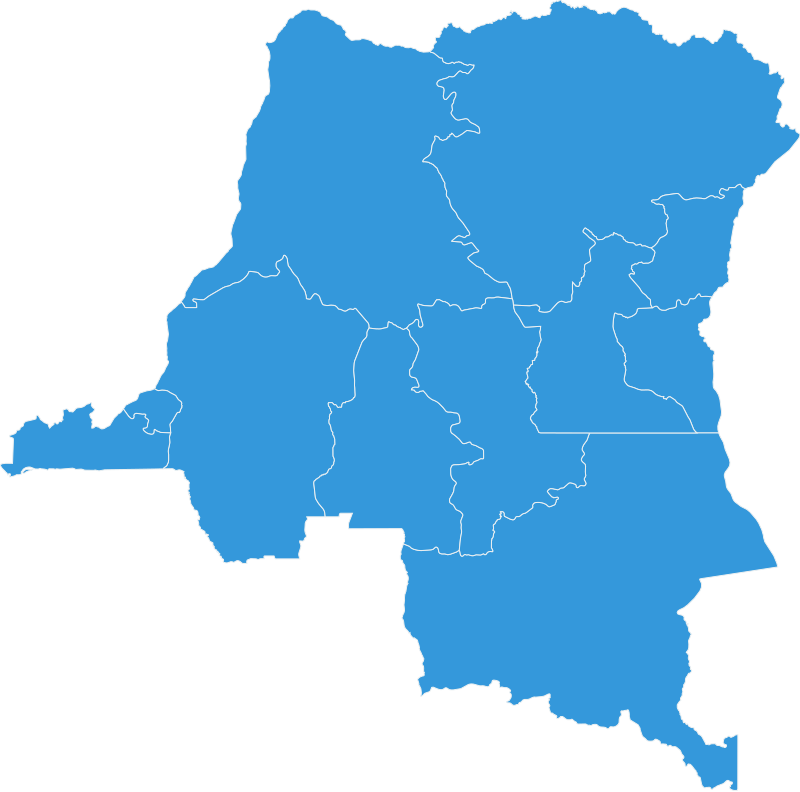
The Democratic Republic of the Congo (DRC) is currently in Phase III of MMS implementation. MMS has been incorporated into antenatal care (ANC) guidelines and other relevant policies, and a costed roadmap for transitioning to MMS has been completed. It is officially classified as a nutritional supplement, aligning with the country’s regulatory framework. While National Task Forces and Advisory Groups have been established to guide implementation, MMS has not yet been included in the Essential Medicines List (EML). Financing remains largely donor-dependent, with no dedicated government budget or investment in delivery system strengthening. Efforts to build healthcare provider capacity are ongoing, but challenges persist in the supply chain (procurement, difficulties in reaching remote and insecure areas, and limited capacity within health facilities).
A social and behavior change strategy has been developed to promote uptake among pregnant women. The government also conducted advocacy and awareness activities, including demand creation through advocacy, communication, and social mobilization (ACSM), as well as meetings, seminars, and workshops on MMS and maternal nutrition. Engagement of community and social influencers was also part of the scale-up efforts.
Vitamin Angels provides support across multiple areas, including supply, delivery, and policy, to advance MMS in the DRC. As of 2025, Vitamin Angels has supplied 1,240,000 bottles of UNIMMAP MMS to support partner-led distribution.
MMS for pregnant women in DRC is delivered free of charge through ANC facilities. In 2024, with UNICEF programs, 7,017 women received MMS. MMS is distributed primarily through ANC facilities and free of charge through the public health system. The initiative is supported by various government bodies and national and international partners. Key challenges include stock availability, slow policy implementation, slow policy adoption at national and provincial levels, and limited integration of MMS indicators into health information systems.
The next steps focus on improving quality, continuing scale-up, and conducting studies on adherence to inform future programming.
Sources: HMHB Survey 2025, UNICEF NutriDash, HMHB Survey 2021-2023, 2nd Africa Regional Meeting Report