

Health Indicators
Programs
Summary: Phase 3. Scale-up delivery at the national or sub-national level
Bhutan, a mountainous kingdom in South Asia, has made notable progress in maternal and child health, yet micronutrient deficiencies continue to pose a public health concern.
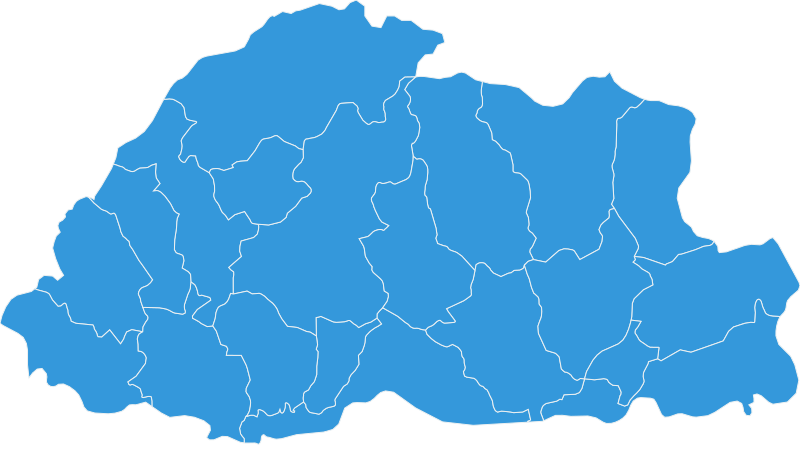
To tackle this challenge, the Ministry of Health teamed up with UNICEF and Vitamin Angels in May 2024 to launch a national Multiple Micronutrient Supplementation (MMS) program. By embedding this initiative into routine antenatal and postnatal care through the Comprehensive Maternal Nutrition and Child Health (CMCH) program, the national MMS program works to reduce maternal anemia, prevent prematurity and low birthweight. As part of this rollout, MMS was successfully introduced across all 20 districts and distributed free of charge through local ANC facilities.
Building on these early successes; which include strong policy alignment and extensive training for frontline health workers; the focus is now shifting toward long-term sustainability. To maintain this momentum, priority actions will center on creating a national task force, adding MMS to the Essential Medicines List, and conducting targeted implementation research. Ultimately, securing reliable domestic financing and strengthening supplier partnerships will be essential to ensuring every mother and child benefits for years to come.
Sources: HMHB Survey 2025, UNICEF NutriDash