

What is BEP Dietary Supplementation?
Providing balanced energy and protein (BEP) dietary supplementation to pregnant women residing in undernourished populations has been shown to improve birth outcomes compared to no BEP supplementation or standard of care (typically iron and folic acid (IFA) supplementation) for pregnant women [1, 2, 3].
The World Health Organization (WHO) recommends antenatal BEP dietary supplementation for pregnant women residing in undernourished populations with a prevalence of more than 20% underweight women (body mass index [BMI] <18.5 kg/m2 or mid-upper arm circumference, no cut-off suggested) to reduce the risk of stillbirths and small for gestational age newborns [2].
BEP dietary supplementation is a promising intervention in enhancing the nutritional status of mothers and babies, particularly in resource-poor settings where access to nutrition and antenatal care services is limited.
Forms of BEP Supplementation
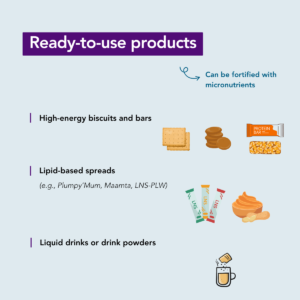
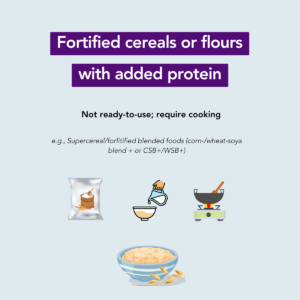
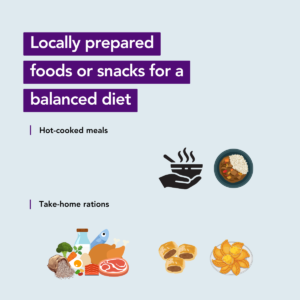
BEP dietary supplements can come in different forms, such as ready-to-use products that are typically fortified with multiple micronutrients and, specifically, energy and protein in a balanced composition such that protein provides less than 25% of the total energy content. Other BEP dietary supplementation forms include fortified cereals or flours with added protein, and locally prepared foods and snacks for a balanced diet.
Composition
Product specifications for BEP dietary supplementation are still under development. In 2017, an Expert Consultation Report [3] proposed the following macronutrient and micronutrient recommendations for BEP dietary supplements:
Macronutrients
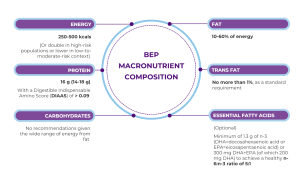
- Energy: 250-500 kcals (or double in high-risk populations or lower in low-to-moderate-risk context)
- Fat: 10-60% of energy
- Protein: 16 g (14-18 g) with a Digestible Indispensable Amino Score (DIAAS) of > 0.09
- Carbohydrates: No recommendations given the wide range of energy from fat
- Trans Fats: No more than 1%, as a standard requirement.
- Essential Fatty Acids (optional): Minimum of 1.3 g of n-3 (DHA=docosahexaenoic acid or EPA=eicosapentaenoic acid) or 300 mg DHA+EPA (of which 200 mg DHA) to achieve a healthy n-6: n-3 ratio of 5:1.
Micronutrients
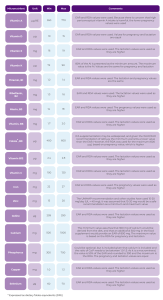
BEP dietary supplements should also be fortified with vitamins and minerals, and the Expert Consultation Report [3] provides a comprehensive list of micronutrients in Table I.
Required Micronutrients
Optional Micronutrients
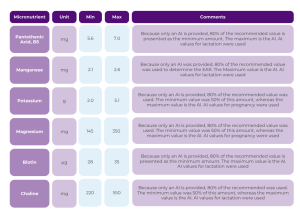
Over 15 micronutrients are recommended, with ranges set at a minimum of EAR (Estimated Average Requirement) and a maximum of RDA (Recommended Dietary Allowance). If a nutrient has an AI (Adequate Intake), then this is considered as the maximum limit. Calcium is to be included at 500 mg.
BEP dietary supplements may include high-energy biscuits, lipid-based spreads, extruded snacks (savory, puffy crispy product, with an option to have a paste inside), bars, encapsulated foods (e.g., a sweet or savory outer covering with a legume base inside), and liquid drink or drink powder.
What Is the Evidence on the Benefits of BEP Supplementation?
Based on the evidence used by WHO guidelines [2] (the Cochrane review conducted by Ota et al., 2016), BEP dietary supplementation, in comparison to no BEP dietary supplementation or the usual standard of care (typically IFA supplementation) provided to pregnant women, has the potential to improve birth weight in infants.
BEP dietary supplementation has also been shown to reduce the risk of stillbirth and infants born too small [1]. Also, this evidence points out that BEP dietary supplementation may have no potential impact on preterm births and little to no effect on newborn deaths [1].
Technical Guidance
-
WHO antenatal care recommendations for a positive pregnancy experience – Nutritional interventions update: Multiple micronutrient supplements during pregnancy. (WHO, 2016).
Read -
Managing the Supply Chain of Specialized Nutritious Foods (World Food Programme, 2019)
This implementation resource focuses on the supply management of BEP supplementation, also known as supplementary nutritious foods, in emergency contexts.
Read
-
- Ota E, Hori H, Mori R, Tobe-Gai R, Farrar D. Antenatal dietary education, and supplementation to increase energy and protein intake. Cochrane Database Syst Rev. 2015; Jun 2:(6):CD000032. doi:10.1002/14651858.CD000032.pub3.
- World Health Organization. WHO recommendations on antenatal care for a positive pregnancy experience. Geneva: World Health Organization; 2016.
- Members of an Expert Consultation on Nutritious Food Supplements for Pregnant and Lactating Women. Framework and specifications for the nutritional composition of a food supplement for pregnant and lactating women (PLW) in undernourished and low-income settings. Seatle, Washington: Bill & Melinda Gates Foundation; 2017.