

Health Indicators
Programs
Download PDFSummary: Phase 3. Scale-up delivery at the national or sub-national level
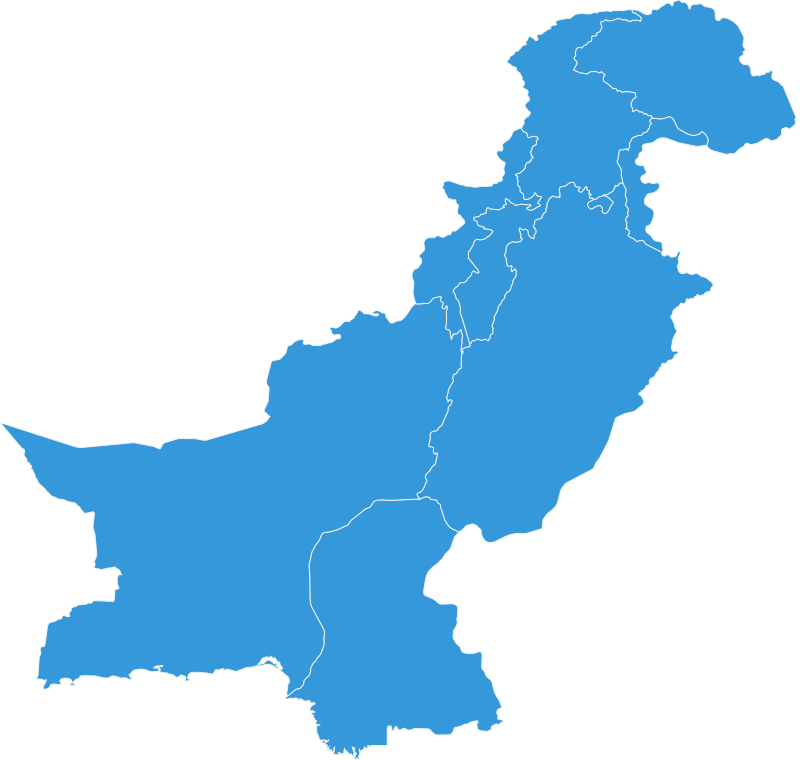
Pakistan has progressed from early discussions to active implementation, research, and initial government‑led introduction of multiple micronutrient supplements (MMS). In 2021, Nutrition International (NI), in collaboration with the Ministry of National Health Services, Regulations & Coordination (MoNHSR&C), launched the Advancing Maternal Health through MMS Implementation Research (AMMI) project. As part of this initiative, MMS was introduced across the entire district of Swabi, Khyber Pakhtunkhwa, through both facility‑based antenatal care (ANC) and the Lady Health Worker (LHW) program.
To guide and oversee this work, the MMS Technical Working Group (TWG) was established in 2021, bringing together government, research, and implementation partners to provide technical direction for the AMMI project.
In early 2023, Pakistan received a donation of approximately 2.2 million bottles of MMS from Kirk Humanitarian. More than half of this donation was distributed initially through small pilot studies across seven districts, followed by wider distribution through the National Disaster Management Authority (NDMA) as part of emergency response efforts in Sindh and Balochistan.
Despite this momentum, budgetary constraints and procurement challenges have resulted in supply gaps, raising concerns about the sustainability and long‑term integration of MMS within national programming.
Importantly, Pakistan’s National Maternal Nutrition Strategy has identified establishing and strengthening financing and resource allocation for maternal nutrition as a key priority in the coming years.
(Sources: HMHB Survey 2025, UNICEF NutriDash and HMHB Survey 2021-2023)
Dashboard
Policy and Regulatory Status
Implementation Status
Coverage and Utilization
Key Program Actors and Partners
Supply Chain
Monitoring Evaluation and Research
Financing and Sustainability
Challenges and Next Steps
Tools and Resources
Summary: Phase 4. Sustained scale-up & integration
The National Programme in Pakistan provides treatment and preventive nutritional supplements. Funding from donors supports Community-based Management of Acute Malnutrition (CMAM) services, including the Targeted Supplementary Feeding Programme (TSFP). The WFP oversees the TSFP, which started in 2010 in response to floods and now focuses on specific hotspots due to recurring emergencies like floods and droughts. In addition, to align with the new WHO guidelines, Pakistan’s Ministry of Health in collaboration with WHO, UNICEF, and WFP are planning to update their local guidelines related to this topic.
Since 2020, the government of Pakistan is sponsoring and implementing an evidence based national flagship nutrition sensitive conditional cash transfer program called, Benazir Nashonuma Programme for stunting prevention based on 1000 days approach, where WFP is the lead technical and implementing partner. The Nashsonuma programme targets the poorest of the poor from the Benazir Income Support Programme (BISP) Kafalat households, where high rates of malnutrition and food insecurity prevail particularly among young children and pregnant and breastfeeding women.
The Nashonuma model has specific focus on maternal and child nutrition, where BEP dietary supplementation for pregnant and lactating women is provided during pregnancy and first 6 months of lactation to all registered BISP Kafalat mothers. The BEP supplement is a Lipid-based Nutrient Supplement called “Maamta,” which was developed and produced locally by Ismail industries, under the technical support of WFP (development, testing, quality assurance of the product; thus, WFP certified). It contains chickpeas, dry skimmed milk, peanuts, hydrogenated vegetable oil, vitamins, minerals, and antioxidants. In the Benazir Nashonuma Programme, WFP leads the implementation, which includes procurement, storage, transportation, and distribution to the last mile. In line with the stunting prevention protocol under Nashonuma programme, one sachet of 75 g Maamta is provided to all the eligible and registered pregnant and lactating women. However, the women who are identified as malnourished i.e., MUAC < 21cm are first treated as per CMAM guidelines, using the same Maamta product but with double the dose (150 g), until they attain the desired MAUC ≥ 21cm. The Nashonuma services are provided through facilitation centers, established within the government health facilities so that the mothers and children can access the essential health services during the 1000 days including antenatal care, institutional deliveries, postnatal care mandatory vaccinations, and timely health care seeking. Notably, the CMAM services are also integrated as part of the stunting prevention package in the Nashonuma model.
Sources: Kissel et al. (2026), Guven et al., 2024